Anvari
انوری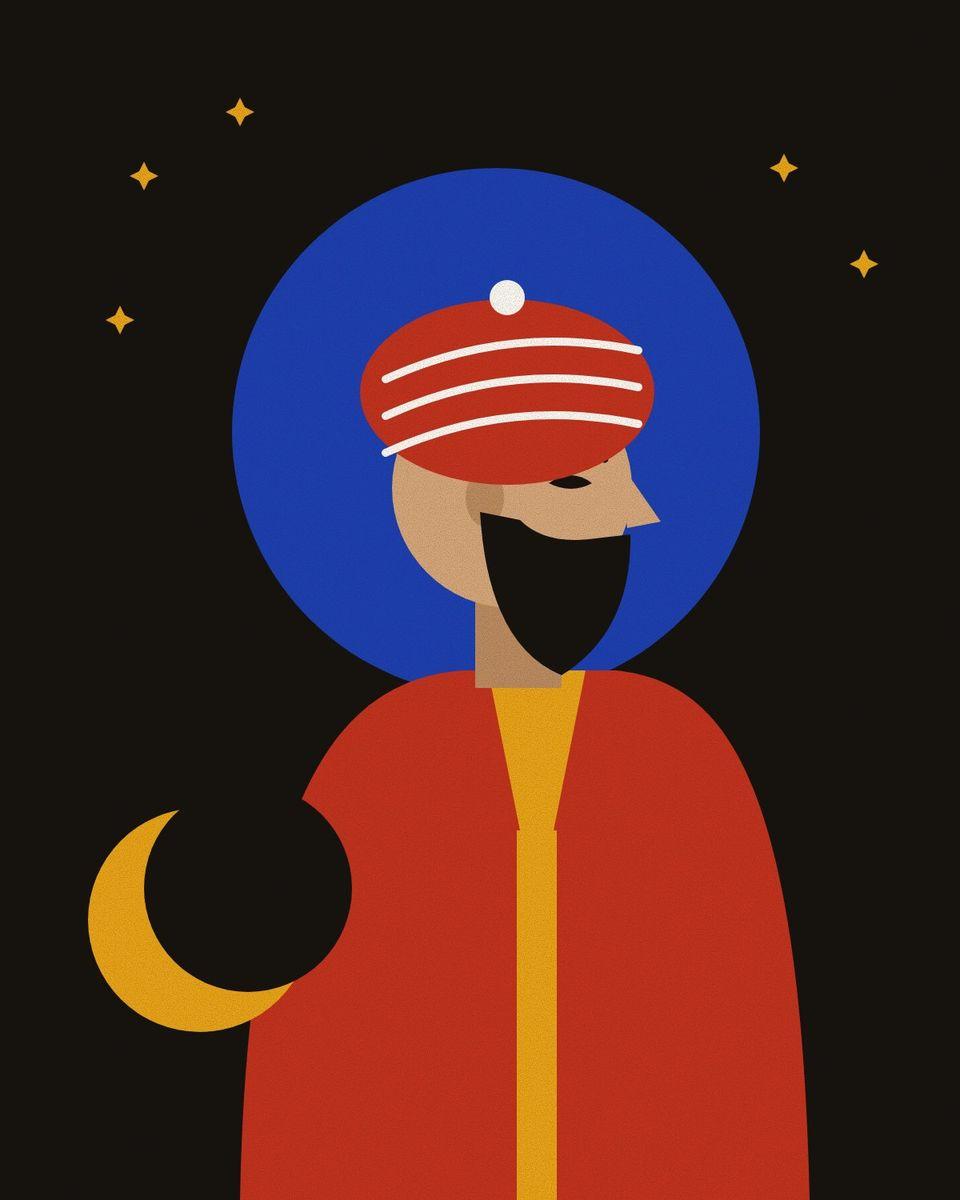
Court poet of the Seljuk sultan Sanjar, counted among the masters of the panegyric qasida.
- Known for
- Court qasidas and short ironic poems
- Forms
- Qasida, Qit'a
- Places
- Merv and Nisaمرو و نسا
- Razavi Khorasanخراسان رضوی
- Balkhبلخ
- Collection
- The Greats
Awhad al-Din Anvari was born in Abivard, on the edge of the Khorasan steppe, and studied at Tus, where he gained a wide knowledge of philosophy, astronomy and mathematics. He became a court poet of the Seljuk sultan Sanjar and is counted among the great masters of the panegyric qasida.
His poems range from elaborate praise to sharp satire and wry short pieces, and the qasida known in English as 'The Tears of Khorasan' laments the ruin of the province by the Ghuzz tribes. A well-known story tells that he predicted a great storm for a conjunction of the planets in 1186 and was mocked when the day passed calmly. He spent his last years in Balkh, where he is said to have died.
Booksکتابها
The principal works of Anvari.
The Divan of Anvari
دیوان انوریAnvari's collected poems, led by his qasidas in praise of Sultan Sanjar and the Seljuk nobility, admired for their wit, learning and clarity. The Divan also holds satires, ghazals and short qit'as, among them some of the most quoted ironic verses in Persian.
Read 3 poems
Poems by Anvariشعرها
In the original Persian, beside an English translation.
به سمرقند اگر بگذری ای باد سحر
نامهٔ اهل خراسان به بر خاقان بر
If you pass by Samarkand, O morning breeze,
carry the letter of the people of Khorasan to the Khan:
The Tears of Khorasan
جرم خورشید چو از حوت درآید به حمل
اشهب روز کند ادهم شب را ارجل
When the body of the sun passes from Pisces into Aries,
the grey steed of day gives white feet to the black steed of night.
When the Sun Enters Aries
هر بلایی کز آسمان آید
گرچه بر دیگری قضا باشد
Every calamity that comes down from the sky,
even if it is decreed for someone else,
Where Is Anvari’s House?
Anvari in Iranian history
Iranian historySeljuks, Mongols and Ilkhanidsسلجوقیان، مغولان و ایلخانان
Turkic and then Mongol conquerors took Iran in turn. The Seljuks built mosques and colleges; the Mongols brought catastrophe, then, as the Ilkhanids, became patrons of history-writing and art.