Sea pari of the Gulf
پری دریاییOn the Persian Gulf coast the pari lives in the sea: beautiful, unpredictable, and part of the lore that sailors, pearl divers and fishing families carried from port to port.
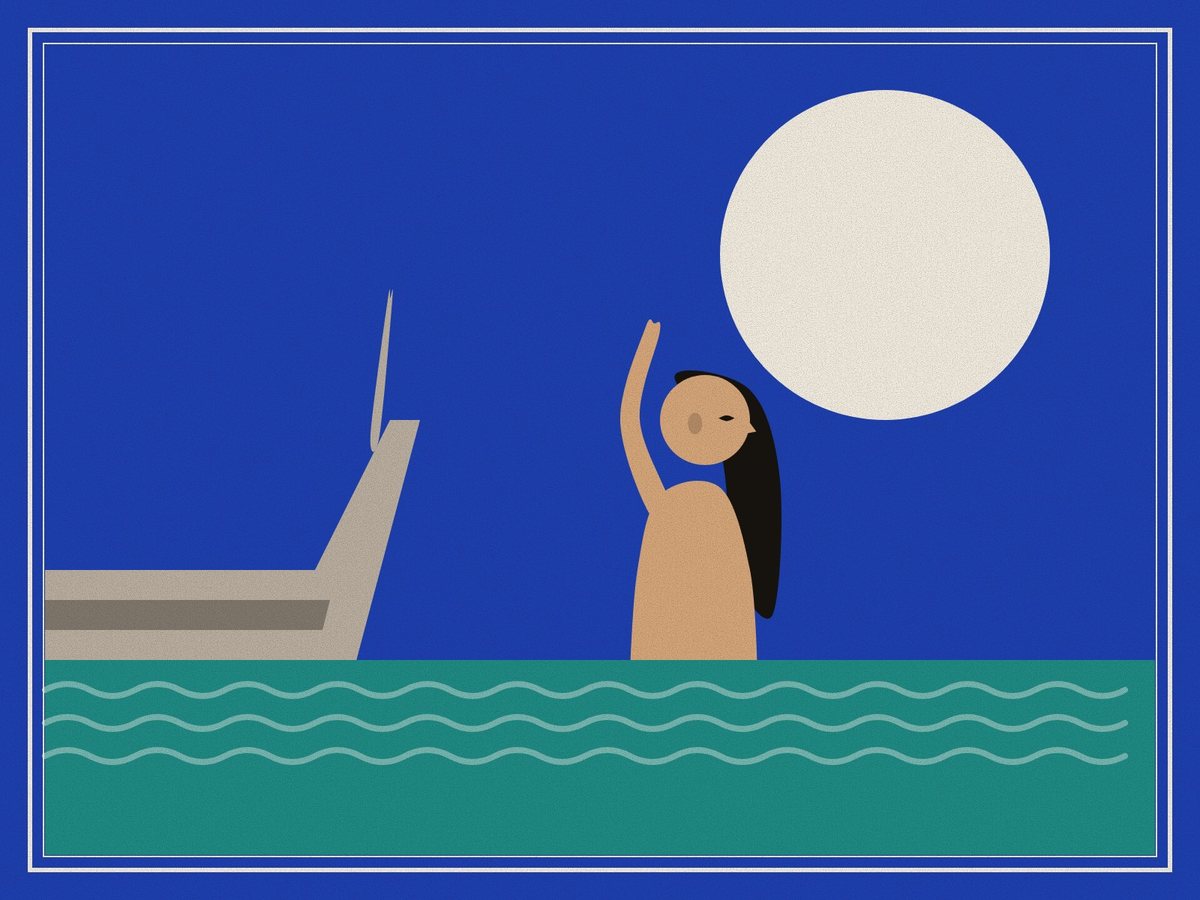
Along the northern shore of the Persian Gulf, from Bushehr to the Hormozgan ports, life was shaped for centuries by the sea: by pearl diving, fishing, long-distance trade with India and East Africa, and the long absences of men at sea. The folk belief of the coast followed the same pattern. The paris who on the inland plateau live by springs and qanats here become creatures of the water, and researchers writing on Bushehr's folklore describe the pari of the coast as, above all, a sea pari, close to what English calls a mermaid.
Like her inland sisters she is ambivalent. In the beliefs recorded in Bushehr she is linked with beauty and fertility, but also with seduction: stories tell of men drawn away by her from boats, beaches and families, or changed after meeting her. Some accounts describe marriages between sea paris and fishermen that end badly once a promise is broken. Old Arabic and Persian books of marvels, drawing on sailors' tales, also told of maidens of the sea and other strange beings in these waters.
A shared sea
The Gulf has always been a meeting place, and its stories cross it freely. Communities on both shores, Persian-, Arabic- and Balochi-speaking, and families with roots in East Africa and India, share many sea legends, with different names for the same kinds of being. Folklorists in the region have long noted that this maritime lore was less studied than the literature of the inland cities, and much of it lived in the songs and talk of the ports rather than in books.
Much of it lived in the songs and talk of the ports rather than in books.
The beliefs here are presented as they have been recorded by researchers. Bushehr's storytellers still tell these tales, and in many coastal families they are remembered as part of a way of life tied to the sea.
More from Folk creaturesموجودات افسانهای
Al
A female being said to haunt women in the days after childbirth, feared across Iran and among its neighbours, and kept at bay with iron, onion and company.
Div
Once a word for gods, the div became the great demon of Iranian story: an enemy of order in the Avesta, a captive scribe in the Shahnameh, and a horned giant in grandmothers' tales.

The White Div
The lord of the divs of Mazandaran, who blinded a king and his army, and whose blood restored their sight after Rostam killed him in his cave.