Gwat
گواتIn Baluchistan, gwat, "wind", names unseen beings that can cause illness, and the gwati ceremony meets them with music, chant and dance.
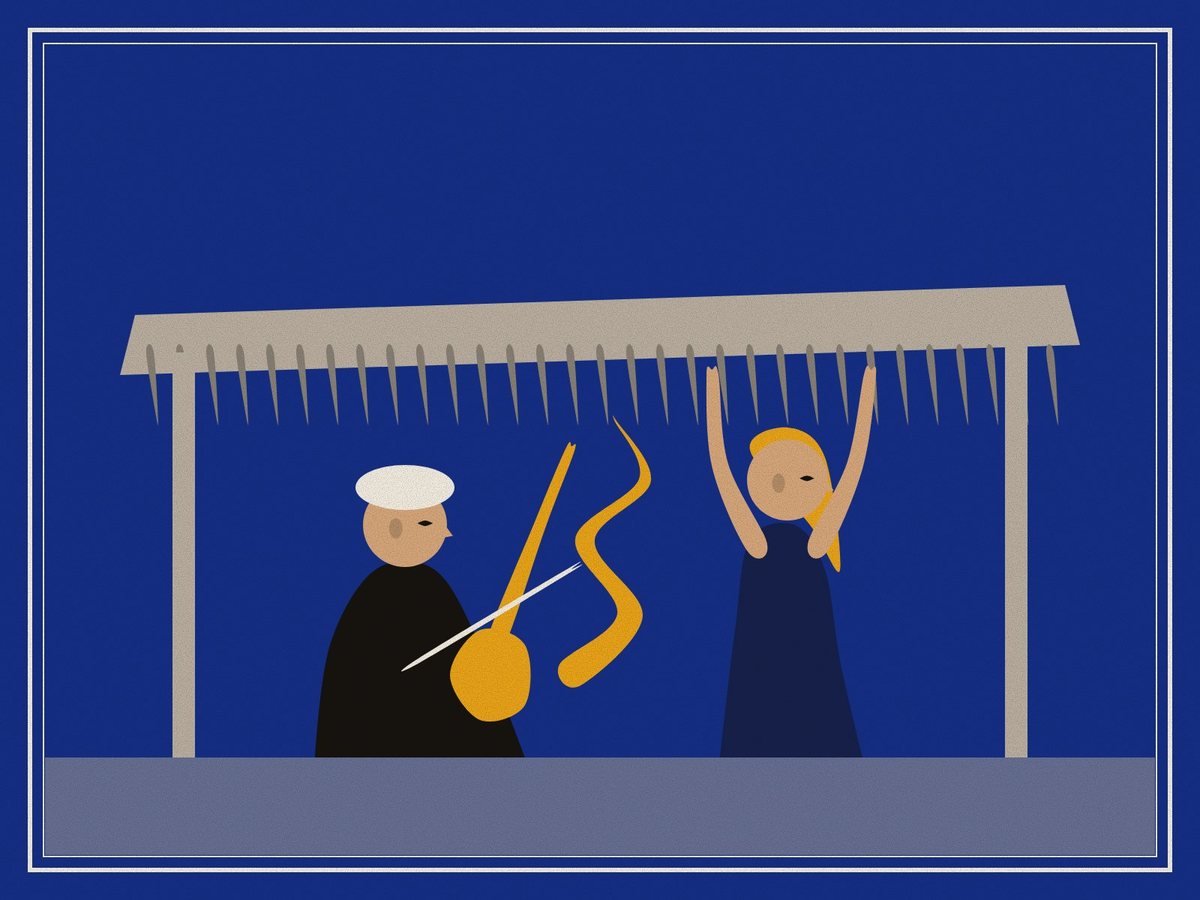
Gwat is the Balochi word for wind, and in Baluch belief it also names a spirit that can take hold of a person and cause physical or mental distress. A person affected is called a gwati, and the healing gathering held for them is known as a gwati ceremony, sometimes leʿb. The practice is found in southern and coastal Baluchistan, on both sides of the Iran–Pakistan border, and researchers report that it continues in many communities today.
Music as medicine
Music is at the centre of the ceremony. The leader, often called the khalifa, works with musicians playing the sorud, the bowed lute of Baluchistan, and the doneli, a double flute, with songs that build in intensity over hours or nights. The aim, as researchers describe it, is to placate the wind rather than expel it, so that the illness does not return. When men dance in the ceremony, the dance is called damāl. Family members and neighbours take part, and in some accounts a woman healer, a gwati-e māt, plays a central role.
The aim is to placate the wind rather than expel it.
Scholars have long compared gwat with the zār of the Persian Gulf coast, and Ali Riyahi's Zār o bād o baluch of 1977 treated them together. The ethnomusicologist Jean During, who recorded Baluch healing music, drew a distinction between the gwat ritual, with its more mystical character, and the zār, with its more therapeutic one. The music of these ceremonies has become known far beyond Baluchistan through recordings and concerts.
This entry describes gwat as its practitioners and researchers have, without judging the experiences it addresses. For many Baluch families it is part of how illness, community and music are bound together.
More from Folk creaturesموجودات افسانهای
Al
A female being said to haunt women in the days after childbirth, feared across Iran and among its neighbours, and kept at bay with iron, onion and company.
Div
Once a word for gods, the div became the great demon of Iranian story: an enemy of order in the Avesta, a captive scribe in the Shahnameh, and a horned giant in grandmothers' tales.
The White Div
The lord of the divs of Mazandaran, who blinded a king and his army, and whose blood restored their sight after Rostam killed him in his cave.