Chamrosh
چمروشThe great bird beneath the Tree of All Seeds, who gathers the seeds the Simorgh shakes loose, and in one account plucks up invaders like grain.
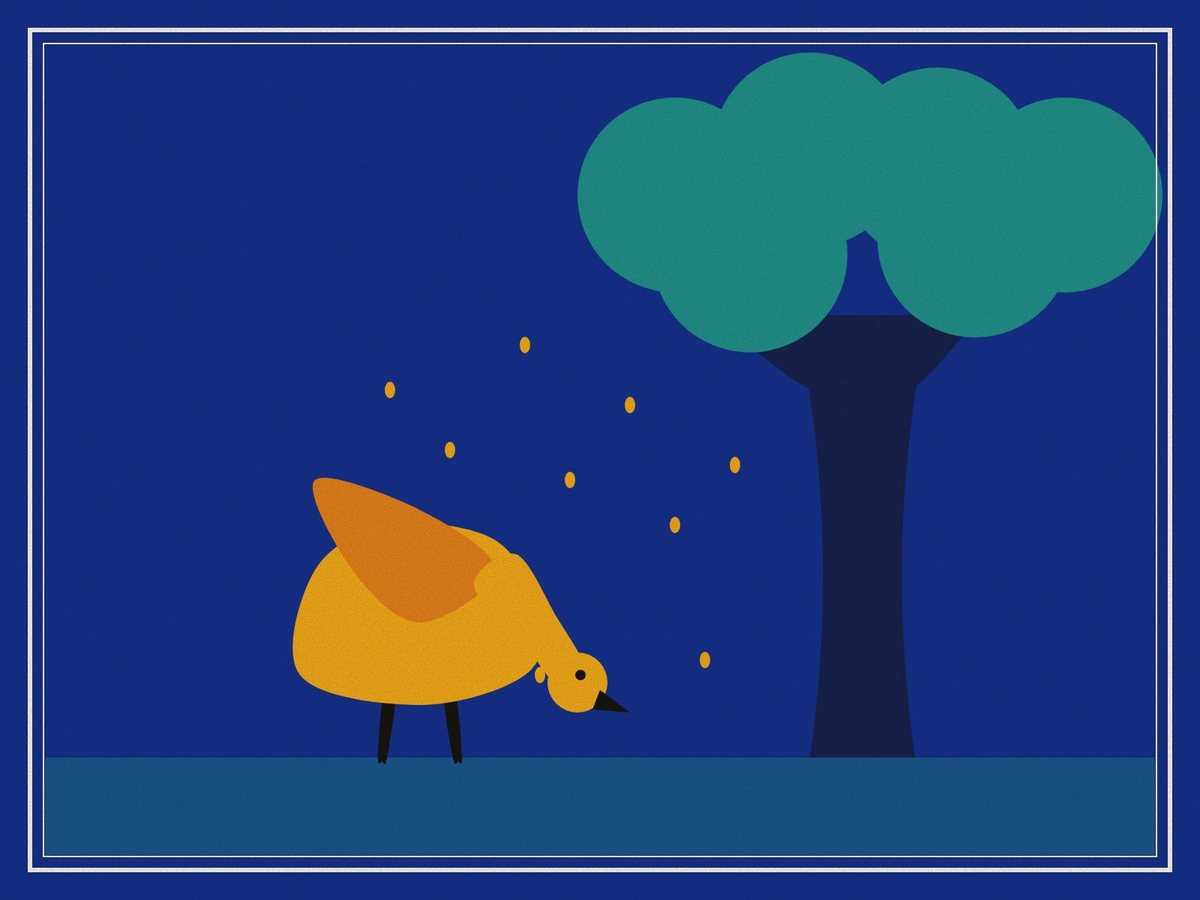
In Zoroastrian cosmology, the world's plants all come from a single tree that stands in the cosmic sea, the Tree of All Seeds. On it perches the great bird the Avesta calls Saēna, the ancestor of the Simorgh. When she settles on the tree, its seeds scatter. Below waits a second bird, Chamrosh, Middle Persian Čamrōš, whose task is to gather those seeds. The Middle Persian Bundahishn, a compendium of Zoroastrian lore compiled in the ninth century from older material, explains that Chamrosh carries them to the place where Tishtrya, the spirit of the star Sirius and of rain, draws up water, so that rain can spread them over the earth.
Chamrosh is a working bird in a working cosmos. Where the Simorgh is grand and rare, Chamrosh is the patient collector who makes sure the seeds are not wasted. In the Zoroastrian picture of the world, every plant that grows owes something to their partnership with the rain.
The patient collector who makes sure the seeds are not wasted.
Guardian of the land
The Pahlavi texts give Chamrosh a second, fiercer role. Sitting on the summit of the mythical mountain Harborz, the bird watches over the lands of Iran. When raiders from outside threaten them, Chamrosh, at the command of the gods, swoops down and picks them up as a bird picks up grain. The image belongs to its time and to an old mythic geography of "Iranian" and "non-Iranian" lands; it is presented here as the texts tell it.
Chamrosh is far less famous today than the Simorgh, and has no great part in the Shahnameh. The Atlas pin uses the Alborz range, whose name descends from Harborz, to stand for that mythic mountain; the real mountains are not the place the texts describe.
Across Cultureپیوندها

Mythology
The Simorgh
The great bird who raised an abandoned prince in her nest, delivered Rostam into the world, and later became Persian poetry's image of the divine.
Mythology
Ahura Mazda and Ahriman
The Wise Lord and the Hostile Spirit: the oldest Iranian account of a world in which every person takes a side, and the moral heart of a faith still practised today.
More from Folk creaturesموجودات افسانهای
Al
A female being said to haunt women in the days after childbirth, feared across Iran and among its neighbours, and kept at bay with iron, onion and company.
Div
Once a word for gods, the div became the great demon of Iranian story: an enemy of order in the Avesta, a captive scribe in the Shahnameh, and a horned giant in grandmothers' tales.

The White Div
The lord of the divs of Mazandaran, who blinded a king and his army, and whose blood restored their sight after Rostam killed him in his cave.