The Shahnameh atlas · The mythical age
Yemen, the land of Sarv
یمنKing Sarv's land, where Fereydun's sons found their brides; the point is approximate
- A real place the poem names
- Sarv, Jandal, Fereydun, Salm, Tur, Iraj, Manuchehr
When Fereydun's three sons are grown, he sends his trusted man Jandal across the world to find them three royal sisters. Jandal searches every land and finds what he is looking for in Yemen, at the court of King Sarv, whom he greets as the chief of the Arabs. Sarv has three daughters and no son, and the request dismays him: to lose them would turn his bright day to night. But he dare not refuse the king who overthrew Zahhak, and his nobles advise him to set a condition. He replies that the princes must come to Yemen in person.
They come, and Yemen turns out to greet them, scattering jewels and saffron and mixing musk with wine, until the horses' manes are wet with it. Sarv gives his three daughters to the three princes and sends them home with litters glittering with the gems of Yemen. In the text the Warners translated, Sarv, a sorcerer, also tests the young men with a killing frost while they sleep, and they withstand it.
Sarv stays in the story. Years later, when Iraj's grandson Manuchehr marches against Salm and Tur, the king of Yemen rides with him as counsellor and holds the centre of the army at his side.
Yemen, in the south-west corner of the Arabian peninsula, was the land of the ancient kingdoms of Saba and Himyar. The poem names no city for Sarv's court, so the point here sits near Sana'a, Yemen's highland capital, only as a marker. Elsewhere in the Shahnameh, Hamavaran, the homeland of Kay Kavus's queen Sudabeh, is often identified with Yemen too.
The tales told hereداستانها
Fereydun divides the world among his sonsبخش کردن جهان میان پسران فریدون
Three brothers marry three sisters of Yemen and receive Rum, Turan and Iran
In Mythologyاسطوره
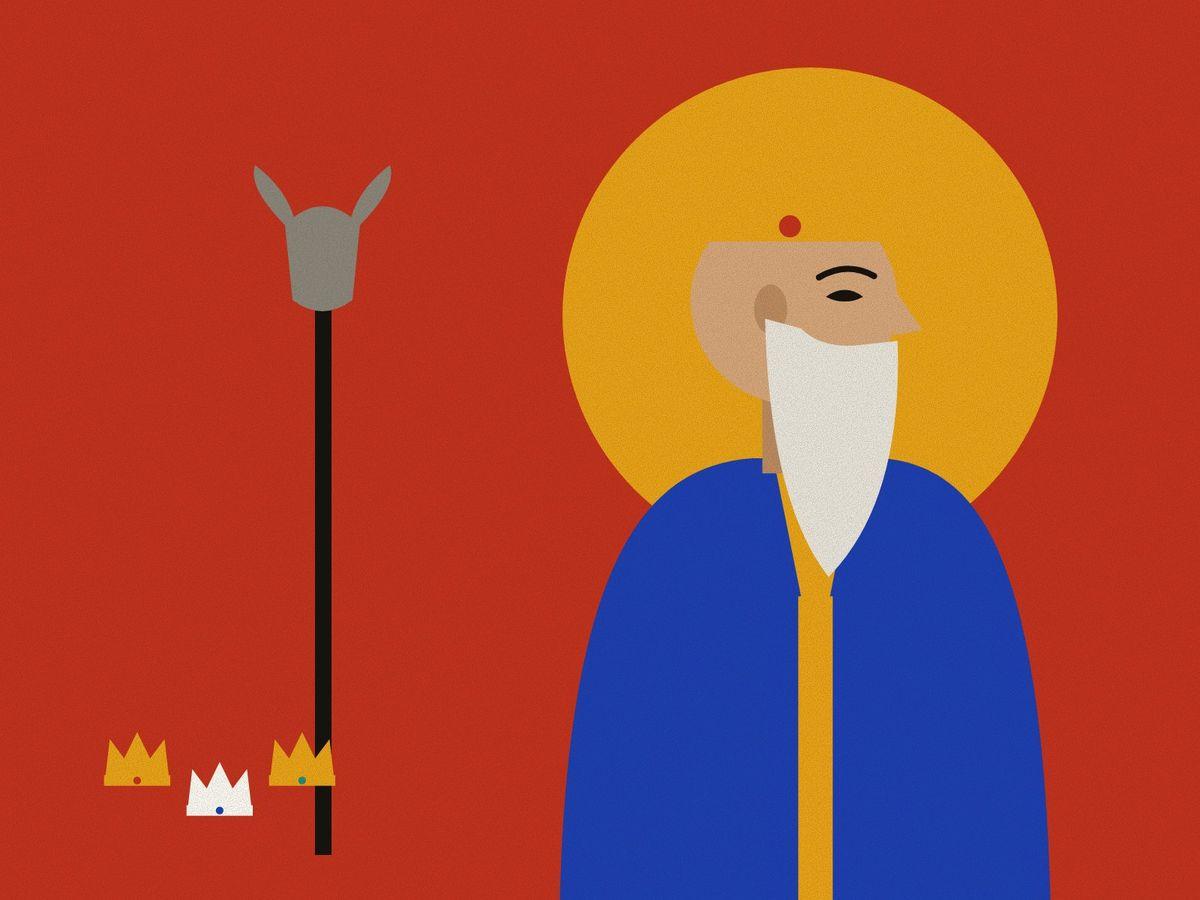
Fereydun and his three sons
The king who freed Iran from Zahhak divided the world between his sons, and in doing so, Ferdowsi says, began the long feud between Iran and Turan.
More from the mythical ageشاهنامه
Takht-e Jamshid (Persepolis)تخت جمشید
Persian tradition gave the ruins of Persepolis to Jamshid, the radiant king of the Shahnameh's golden age. The poem never names the site; the connection was made by the people who lived beside it.
The Arvand (Tigris)اروند
On his way to overthrow Zahhak, Fereydun reaches the Arvand, which Ferdowsi explains is the river the Arabs call the Dejla, the Tigris. When the ferryman refuses him, he rides straight into the water.
Kang Dezhhukhtکنگ دژهوخت
Zahhak rules the world from a palace city that the poem calls Beyt al-Moqaddas, Jerusalem, adding that in Pahlavi it was called Kang Dezhhukht. Here Fereydun frees Jamshid's daughters and confronts the tyrant.
Mount Damavandکوه دماوند
Iran's highest mountain is the prison of the serpent-shouldered tyrant Zahhak. Fereydun chains him in a cave inside it, and folk tradition still hears him in the mountain's rumbles.