The Shahnameh atlas · The heroic age · The reign of Kay Kavus
Siyavash crosses into Turan
رفتن سیاوش به تورانRefusing to break his oath, Siyavash leaves Iran for the land of his father's enemy
Word comes that Afrasiab, despite his oaths, is gathering an army. Kay Kavus means to lead the war himself, but Siyavash asks for the command, hoping it will free him from Sudabeh and from his father's suspicion. Kavus agrees and sends Rostam with him. The prince spends a month with Zal in Zabolestan, then marches by Herat, Taleqan and Marvrud to Balkh. After three days of fighting the Turanian commanders flee across the river. Siyavash writes for orders, and Kavus answers: wait, do not cross, Afrasiab will come to you.
That night Afrasiab cries out in his sleep and shakes like a tree in the wind. He has dreamed of a desert full of snakes under a sky full of eagles. A storm threw down his banner, Iranian riders came with heads on their spears, and he was dragged in bonds before Kay Kavus, where a son of Kavus, not yet fourteen, cut him in two with a sword. His wise men, once promised their lives, tell him what it means. If he fights Siyavash and kills him, Turan will be laid waste by the vengeance. So Afrasiab chooses peace, and sends his brother Garsivaz across the river with horses, gold and slaves.
Siyavash and Rostam suspect a trick and set terms: a hundred of Afrasiab's kinsmen as hostages, named by Rostam, and the surrender of the Iranian lands he holds. Afrasiab agrees. He sends the hostages and withdraws from Bukhara, Sughd, Samarkand, Chach and Sepijab, and Rostam rides to court with the news.
The broken peace
Kavus is furious. Afrasiab has dazzled them with plunder, he says. Siyavash must send the hostages to him in chains, to be put to death, and carry the war to the enemy's gates. When Rostam protests that breaking the treaty would be a crime, Kavus accuses him of putting the idea in the young man's head, and Rostam leaves the court in anger. Tus is given the army, and Kavus's letter to his son is harsh: load the hostages in chains on the backs of asses, or hand the army to Tus and come home.
Siyavash sees evil on every side. If he sends the hostages, his father will hang them, innocent men. If he attacks without cause, he breaks an oath sworn before God. If he goes home, Sudabeh and his father's anger are waiting. Bahram and Zangeh beg him to write to his father and ask for Rostam back, but he will not. He sends Zangeh to return the hostages and the gifts to Afrasiab, with a message: from this peace war is his share, the sweetness is Afrasiab's and the poison his own. He asks only for a road to some land where he will hear no more of Kavus.
Siyavash sees evil on every side.
Afrasiab consults Piran, his wise general, who advises him to welcome the prince like a son: Kavus is old, and Siyavash may one day rule both lands. Afrasiab writes inviting him to Turan and swears by God to do him no harm. Siyavash hands the camp, the treasure and the elephants to Bahram to give to Tus, chooses three hundred horsemen and leads them to the Jayhun with tears in his eyes. On the far side Termez is decked out like spring, and Piran comes to meet him with white elephants and a thousand of his kin.
From the poemاز شاهنامه
Ferdowsi's words, with the English of Arthur and Edmond Warner's translation (1905–1925).
بیابان پر از مار دیدم به خواب
جهان پر ز گرد آسمان پر عقاب
I saw in sleep a desert full of serpents,
The sky all eagles and the ground all dust,
ازین آشتی جنگ بهر منست
همه نوش تو درد و زهر منست
Say: 'Through this peace my lot is one of war:
Thine are the sweets, the pang and poison mine,
جهاندار یزدان پناه منست
زمین تخت و گردون کلاه منست
God is my refuge, heaven my covering,
The ground my throne.
In Mythologyاسطوره
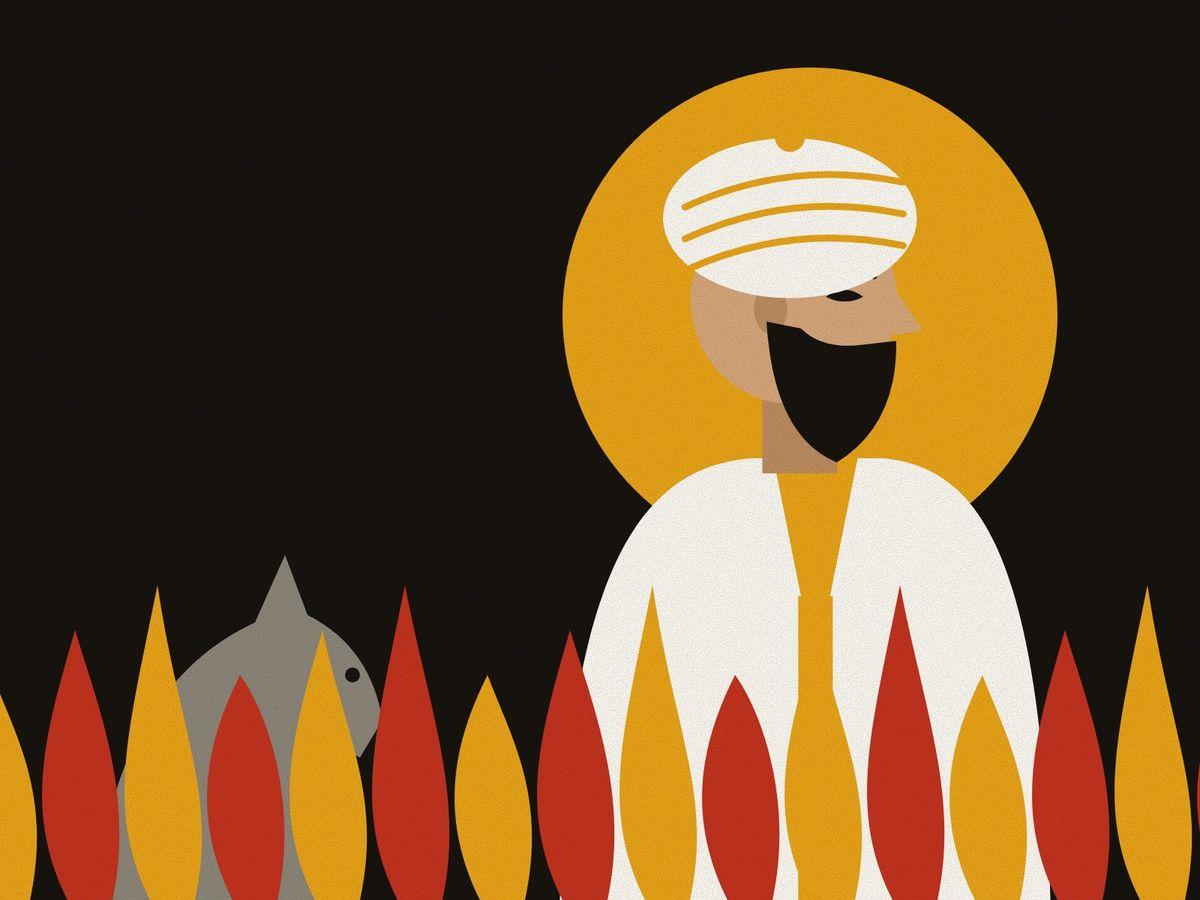
Siyavash and the trial by fire
The innocent prince who rode through fire to prove his honour, kept his word at the cost of his life, and was mourned for centuries in Central Asia.