The Shahnameh atlas · The heroic age · The reign of Kay Kavus
The trial by fire
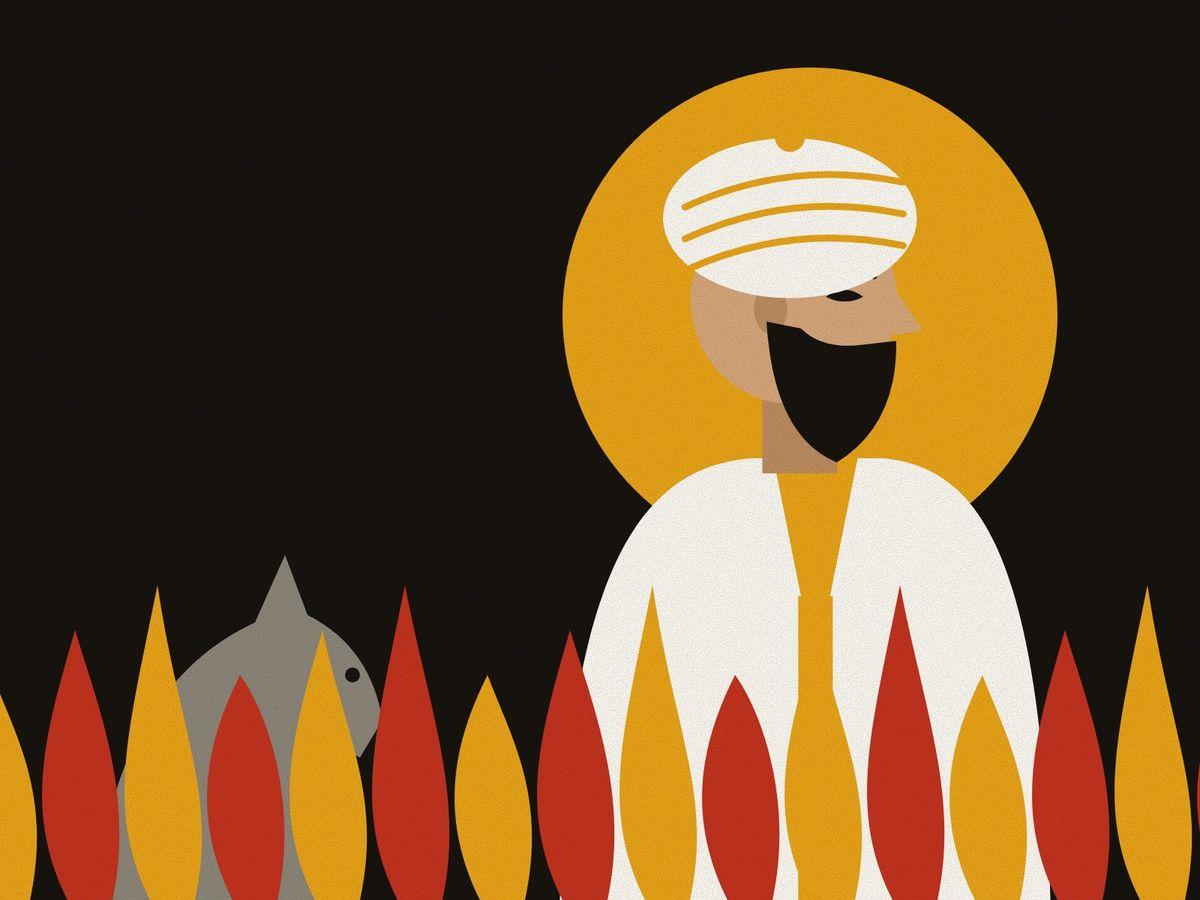
گذر سیاوش از آتشSiyavash rides through a mountain of fire to prove his innocence
Kay Kavus cannot decide between his son and his wife. Both are his own blood and brain, and if either proves guilty, who will call him king afterwards? He asks them both. Sudabeh says she has shown him the dead infants, and it is for Siyavash to clear himself. Siyavash answers that such a charge makes hell itself seem light. If it is a mountain of fire, he will cross it.
The Shah has a hundred caravans of camels brought from the plain to carry firewood, and all Iran comes out to watch. Two mountains of wood rise on the plain, visible two farsangs (leagues) away, with a narrow road between them. Kavus orders black naphtha poured on the wood, and two hundred men blow on the fire. First there is smoke, then flame, until the ground is brighter than the sky. The crowd weeps at the sight of the prince's smiling face.
Siyavash comes before his father in a golden helmet and white clothes, riding a black Arab horse, his lips full of laughter. He has scattered camphor over himself, as is done for a body prepared for the shroud. He dismounts and bows, and sees that his father is ashamed. Do not grieve, he tells him: if he is innocent he will be set free, and if he is guilty the Creator will not protect him. By God's strength he will not feel the heat. Then he rides into the fire.
Out of the fire
A cry goes up from the city and the plain. Sudabeh hears it and climbs to the palace roof to watch, wishing him harm. The flames close over horse and rider until no one can see his helmet, and the whole plain waits with eyes full of blood. Then he rides out. "The new king has come out of the fire!" the people shout. His clothes are untouched, as if he carried jasmine in his lap; when God grants mercy, Ferdowsi says, the breath of fire and water are the same.
The flames close over horse and rider until no one can see his helmet.
The horsemen ride to meet him and the people scatter coins before him. Kavus dismounts, embraces his son and asks his pardon, and the feast lasts three days. On the fourth Kavus sits on his throne with his ox-headed mace and condemns Sudabeh to be hanged, and the Iranians agree that she deserves death. Even now she claims that Siyavash escaped by Zal's sorcery.
As she is led away and the women of the palace cry out, Siyavash begs his father to forgive her. He thinks that if she dies, Kavus will one day regret it and blame him. Kavus, who has been looking for an excuse to pardon her, grants the request, and Siyavash himself takes her back to the women's quarters. In time Kavus's love for her returns, and she begins again, in secret, to turn him against his son.
From the poemاز شاهنامه
Ferdowsi's words, with the English of Arthur and Edmond Warner's translation (1905–1925).
اگر کوه آتش بود بسپرم
ازین تنگ خوارست اگر بگذرم
I would pass o'er a mountain all aflame,
'Twere baseness not to rid me of this shame."
پراگنده کافور بر خویشتن
چنان چون بود رسم و ساز کفن
The prince then sprinkled camphor o'er himself,
So bodies are prepared for burial,
چو او را بدیدند برخاست غو
که آمد ز آتش برون شاه نو
A roar went up as men caught sight of him:
They cried: "The young Shah cometh from the fire!"
In Mythologyاسطوره
Siyavash and the trial by fire
The innocent prince who rode through fire to prove his honour, kept his word at the cost of his life, and was mourned for centuries in Central Asia.