The Shahnameh atlas · The heroic age · The reign of Kay Kavus
Sohrab and Gordafarid at the White Castle
سهراب و گردآفریدA woman warrior fights Sohrab at the White Castle, then talks her way free
News reaches Afrasiab that a boy who still smells of milk has launched his ship on the water and is gathering an army against Kay Kavus. Afrasiab laughs with pleasure. He sends twelve thousand men under two commanders, Human and Barman, with gifts and a flattering letter, and gives them a secret order. The son must never learn which of the enemy is his father. If the old hero dies at Sohrab's hands, Iran will lie open, and afterwards Sohrab can be put to sleep one night for good.
On the frontier stands the White Castle, the stronghold on which the Iranians pin their hopes, held by the seasoned warrior Hojir. When Sohrab's army comes in sight, Hojir rides out alone. Sohrab asks his name, for his mother will have to weep for him. Hojir boasts that he will send Sohrab's head to the Shah. His spear strikes Sohrab's waist and does not pierce. Sohrab turns his own spear round, strikes him with the butt, lifts him from the saddle and is sitting on his chest, ready to cut off his head, when Hojir begs for quarter. Sohrab spares him and sends him bound to Human.
Gordafarid
In the castle, the daughter of old Gazhdaham hears that its captain is lost. She is Gordafarid, a woman who rides like a champion and is famous in war. Ashamed at Hojir's defeat, she puts on a rider's armour, hides her hair beneath the mail, fastens a Rumi (Byzantine) helmet on her head and comes down from the castle like a lion, shouting a challenge at the Turanian ranks. Sohrab laughs and bites his lip: another wild ass has walked into the hunter's trap.
She meets him with a storm of arrows, wheeling left and right, then slings her bow on her arm and charges with the lance. Sohrab strikes her on the belt and tears open her mail. She draws her sword and cuts his spear in two, but she knows she cannot hold him and turns to flee. He catches her and pulls the helmet from her head. Her hair falls loose and her face shines like the sun. Sohrab sees that she is a girl, and marvels: if Iran sends girls like this into battle, what must its horsemen be? He throws his lasso round her waist.
Gordafarid has one weapon left, and it is words. Both armies are watching, she tells him. If they see that he has been fighting a girl, they will talk, so better to settle this quietly. The castle, its treasure and its keeper are his. Sohrab, taken with her face, lets her ride back to the gate. It opens, she goes in, bruised and bound, and it closes behind her.
Gordafarid has one weapon left, and it is words.
Then she climbs the wall, laughing, and calls down to him. Why trouble himself? Let him go home. The Turks, she mocks, will find no mates in Iran. He is too fine to be a Turk, she adds, but when the Shah and Rostam come his army will not survive, and he would do better to turn back to Turan. Sohrab, ashamed, plunders the land around the walls and promises to bring them down at dawn.
That night old Gazhdaham writes to Kay Kavus about the young champion and leads the garrison away by an unknown road. In the morning Sohrab rides to the castle and finds no fighting man inside. Gordafarid appears in fewer than a hundred couplets, but modern readers have made her one of the best-loved figures in the poem.
From the poemاز شاهنامه
Ferdowsi's words, with the English of Arthur and Edmond Warner's translation (1905–1925).
زنی بود برسان گردی سوار
همیشه به جنگ اندرون نامدار
A woman like some valiant cavalier
Was she and ever famous in the fight.
رها شد ز بند زره موی اوی
درفشان چو خورشید شد روی اوی
Her hair escaped, her face shone like the sun.
بخندید و او را به افسوس گفت
که ترکان ز ایران نیابند جفت
But she laughed and mocked him:
"The Turkmans win no helpmates from Iran,
In Mythologyاسطوره
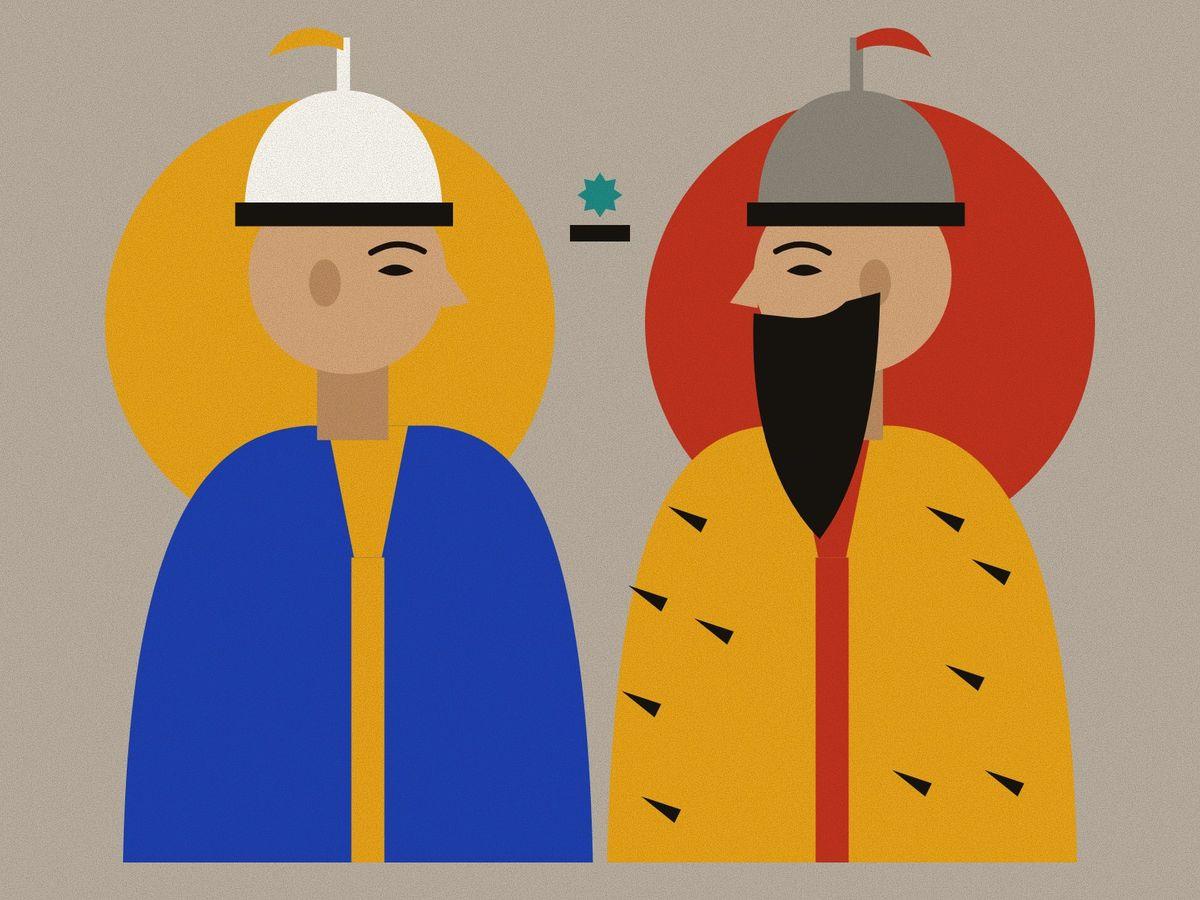
Rostam and Sohrab
A father and son who have never met face each other on the battlefield. It is the most heartbreaking episode in the Shahnameh, and Ferdowsi knows it.