The Shahnameh atlas · The heroic age · The reign of Kay Kavus
Rostam and Tahmineh
رستم و تهمینهA stolen horse, a midnight visitor, and the son Rostam will meet only in battle
Rostam wakes one morning in a dark mood. He fills his quiver, mounts Rakhsh and rides to the marches of Turan to hunt. On a plain full of wild asses he brings down game, roasts an onager on a tree branch for a spit, eats it down to the marrow and lies down to sleep while Rakhsh grazes in the meadow. Seven or eight Turkish horsemen ride by, see the horse, catch him and lead him away to their city.
When Rostam wakes, Rakhsh is gone. Ashamed, and imagining what the warriors will say (who took his horse? did the great Rostam sleep through it?), he sets out on foot after the tracks and comes to Samangan. The king and his nobles come out to meet him. The king promises that a horse as famous as Rakhsh cannot stay hidden for long and asks him to be his guest. Rostam drinks late with the king and goes to bed drunk.
A visitor at midnight
A part of the night has passed when the door of his chamber opens softly. A slave comes in with a scented candle, and behind her a girl like the shining sun, with brows like bows and locks like lassos. Rostam asks her name and what she seeks in the dark. She is Tahmineh, she says, daughter of the king of Samangan, born of the stock of lions and leopards. No one has seen her outside the women's quarters or heard her voice, but she has heard every story told of him: the lions and divs he does not fear, the nights he spends alone in Turan, the onager he roasts on a single fire. She has bitten her lips at these tales.
If he wants her, she is his, for three reasons. She has given up her good sense for love of him. She hopes that God will give her a son by him, as brave and strong as he is. And she will bring back Rakhsh and lay Samangan at his feet. Rostam sees that she is wise as well as beautiful, and that she brings news of his horse. He sends a mobed, a priest, to ask her father for her hand, and the king gives her to him with the proper rites.
At dawn Rostam takes from his arm a famous mohreh, a jewel worn as an amulet, and gives it to her. If she bears a daughter, he says, she should sew it into the girl's hair; if a son, she should bind it on his arm as a sign of his father. The boy will be as tall as Sam son of Nariman and will bring eagles down from the clouds. He kisses her eyes and head, and she turns away in tears. Then the king brings word that Rakhsh has been found, and Rostam saddles his horse and rides away.
She has bitten her lips at these tales.
Sohrab
Nine months later Tahmineh bears a son as bright as the moon. When he laughs and his face shines, she names him Sohrab. At one month he looks a year old. At three he plays polo, at five he takes up the bow, and at ten no one in that land dares to fight him. Then he comes to his mother, demands to know whose son he is, and swears that if she hides it he will not leave her alive.
She tells him the truth. He is the son of Rostam, of the line of Zal, Sam and Nariman. She shows him a letter from his father and the gift Rostam sent from Iran, three rubies set in gold. Afrasiab must not know of this, she warns, and if Rostam learns what a son he has, he will call him away and break her heart.
Sohrab will not keep the secret. Old warriors tell stories of Rostam, he says, so why hide them from his son? He will raise an army of Turks, drive Kay Kavus from his throne and seat Rostam as king of Iran. Then he will march on Turan and take Afrasiab's throne as well. With Rostam as the father and himself as the son, no one else in the world should wear a crown.
From the poemاز شاهنامه
Ferdowsi's words, with the English of Arthur and Edmond Warner's translation (1905–1925).
چنین داد پاسخ که تهمینهام
تو گویی که از غم به دو نیمهام
She said: "Tahmina: and thou well mayst say
That mine affliction teareth me in twain.
ور ایدونک آید ز اختر پسر
ببندش ببازو نشان پدر
While if the stars vouchsafe to thee a son
Bind round his arm this token of his father.
چو روشن بود روی خورشید و ماه
ستاره چرا برفرازد کلاه
When sun and moon are shining in the sky
Why should the stars set up their crowns on high?"
In Mythologyاسطوره
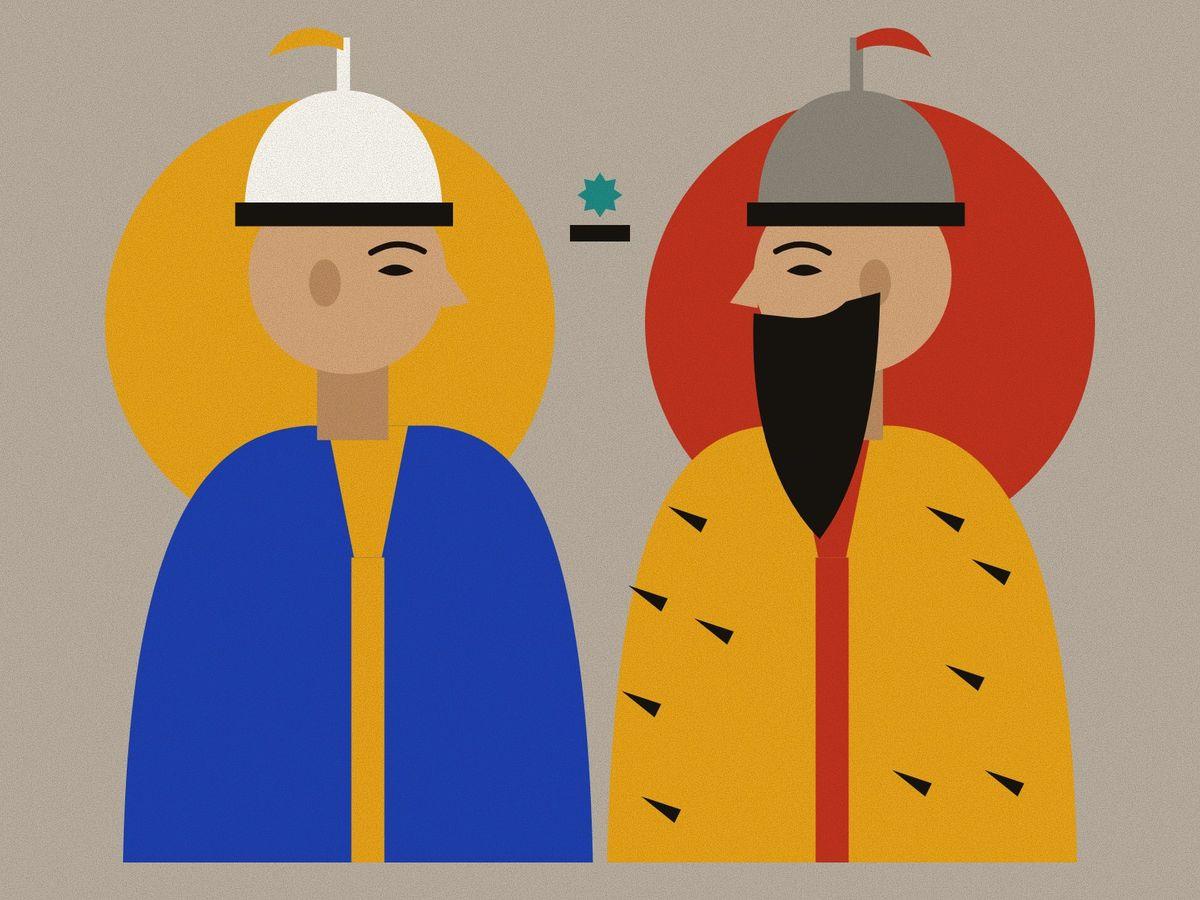
Rostam and Sohrab
A father and son who have never met face each other on the battlefield. It is the most heartbreaking episode in the Shahnameh, and Ferdowsi knows it.