The Shahnameh atlas · The mythical age · The reign of Tahmuras
Tahmuras, binder of the divs
طهمورث دیوبندA king rides Ahriman like a horse, and the defeated demons teach him to write
Hushang's son Tahmuras takes the throne and calls the mobeds (priests) to him. 'Throne and crown, treasure and army are mine,' he says. 'I will wash the world clean of evil, cut short the reach of the div (demon) everywhere, and bring into the open everything useful that is still hidden.' From the first line the poem gives him his title: divband, the binder of demons.
He begins with the flocks. Wool and hair are shorn from sheep and lambs, and people learn to spin; he shows them how to make clothes and floor coverings. He feeds the swiftest animals on grass, straw and barley. Among the wild hunters he picks out the caracal and the cheetah and brings them in from the plains and hills; among the birds he chooses the hawk and the falcon and trains them while the world watches in wonder. He brings in the hen, and the cock that crows at the beat of the drum, and tells his people to treat them gently. 'Praise the Creator,' he says, 'who has given us power over the beasts.'
He has a pure-hearted minister named Shahrasp, who fasts all day and stands in prayer all night, and who shows the king only the way of goodness. Under his guidance Tahmuras grows so clean of evil that the divine farr, the glory of rightful kings, shines from him. He goes out and binds Ahriman, the spirit of evil, with spells, saddles him like a swift horse and rides him around the world.
The divs see it and rebel. They gather in great numbers, sorcerers among them, with the Black Div at their head, roaring up to the sky. Tahmuras girds himself and lifts his heavy mace. The battle is short. Two thirds of the demons he binds with spells; the rest he beats down with the mace. Dragged off bound and wounded, they beg for their lives. 'Do not kill us,' they say, 'and we will teach you a new art that will serve you well.'
The demons buy their lives with the alphabet.
The demons buy their lives with the alphabet. Tahmuras spares them, and once free they have no choice but to serve him. They teach him to write: not one script but nearly thirty, Rumi, Arabic and Persian, Sogdian, Chinese and Pahlavi, every kind, the poet says, that you have ever heard of. Knowledge lights up the king's heart. He reigns for thirty years, and when his time is over his labours remain as his memorial.
The Black Div at the head of the rebels bears the name of the demon Hushang destroyed in the reign before. Ferdowsi does not explain it. His English translators, the Warners, suggest that the poet was following his sources faithfully rather than making them agree.
From the poemاز شاهنامه
Ferdowsi's words, with the English of Arthur and Edmond Warner's translation (1905–1925).
پسر بد مر او را یکی هوشمند
گرانمایه طهمورث دیو بند
Hushang possessed a wise and noble son
Hight Tahmuras — the Binder of the Div —
برفت اهرمن را به افسون ببست
چو بر تیز رو بارگی بر نشست
Bound Ahriman with spells and rode him horsewise
At whiles around the world.
نبشتن یکی نه، که نزدیک سی
چه رومی، چه تازی و چه پارسی
And taught him how to write some thirty scripts
Such as the Rumi, Persian, Arabic,
In Mythologyاسطوره

Kayumars and the first kings
In Ferdowsi's Shahnameh, history begins on a mountainside with a king in a leopard skin, and the gifts of civilisation are won one by one: fire, iron, tamed animals, writing.
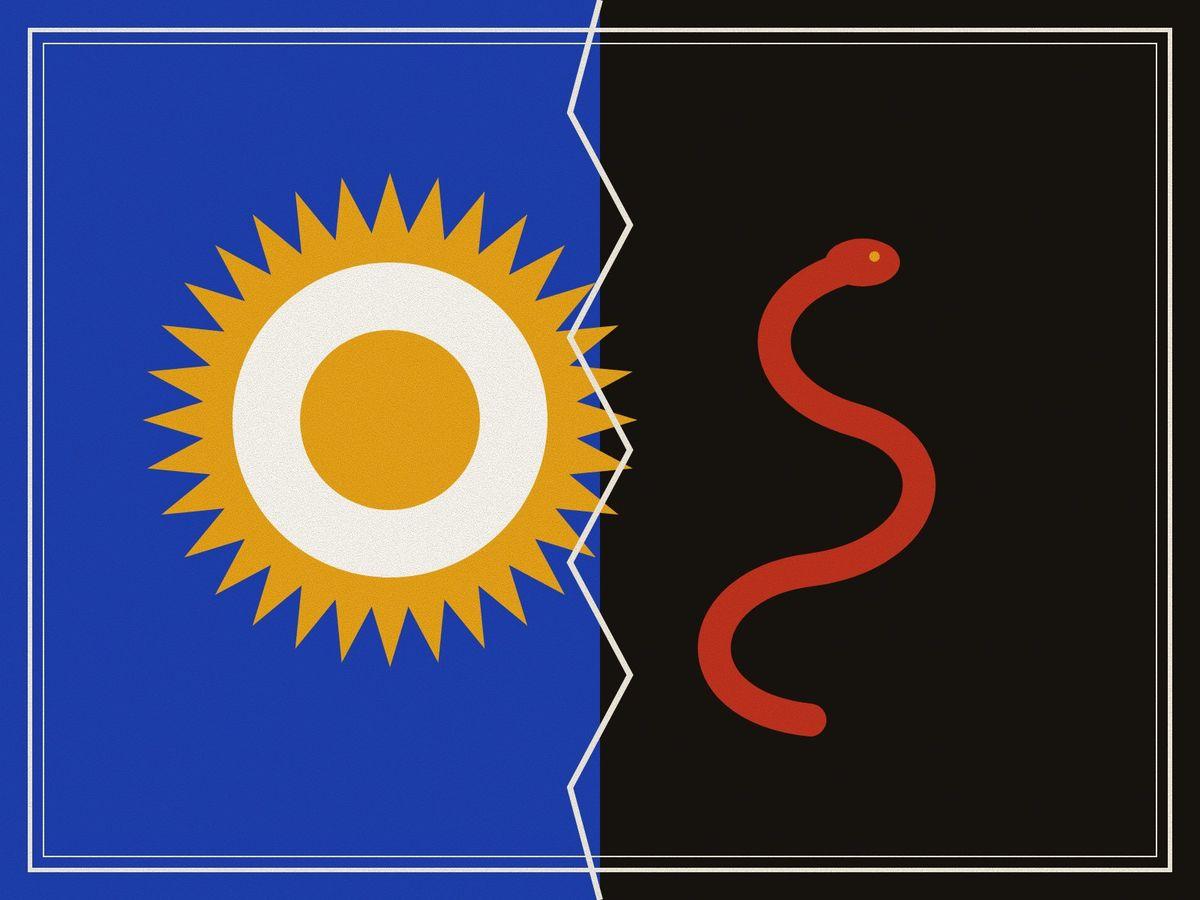
Ahura Mazda and Ahriman
The Wise Lord and the Hostile Spirit: the oldest Iranian account of a world in which every person takes a side, and the moral heart of a faith still practised today.